
The Batesburg-Leesville Police Department has served our community since 1875. The history of this agency is one of a continual state of adaptation to the needs of the community, while providing efficient law enforcement services for the past 150 years. In years past, as the same for today, courageous men and women have sworn an oath of office and joined the ranks of carrying out the duty of serving the Batesburg-Leesville Community to ensure the safety and security for all of our citizens.
*A historical display of agency related memorabilia and photos has recently been established as a means of honoring and remembering the sacrifices and contributions of law enforcement officers of the past who have contributed to the history of the Batesburg-Leesville Police Department. This display can be viewed by members of the public by appointment at the Batesburg-Leesville Police Department. If anyone has any photographs or memorabilia that they would like to contribute or donate to this project please contact the Batesburg-Leesville Police Department.
Batesburg Police Department Officer George W. Nobles. Circa 1916


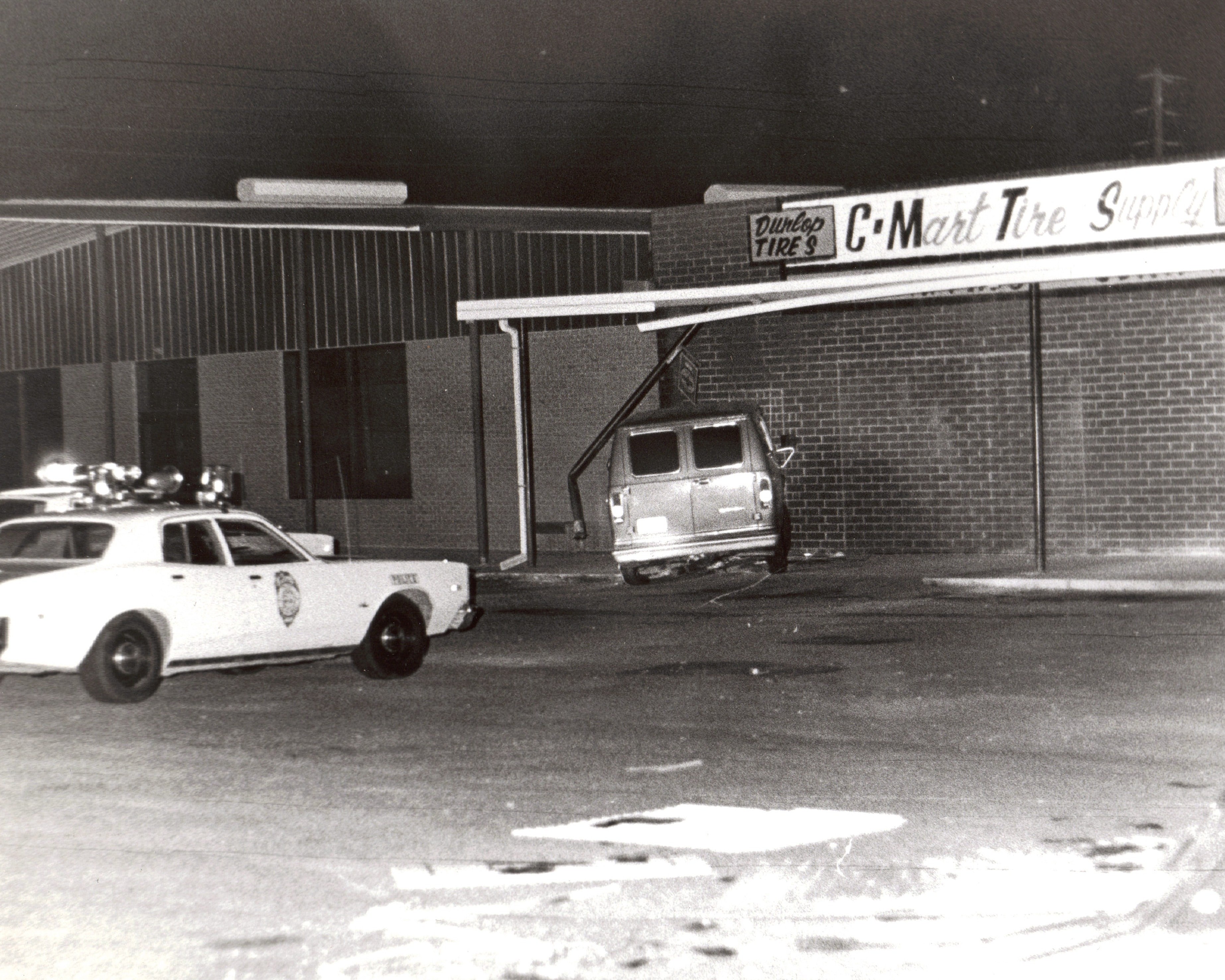


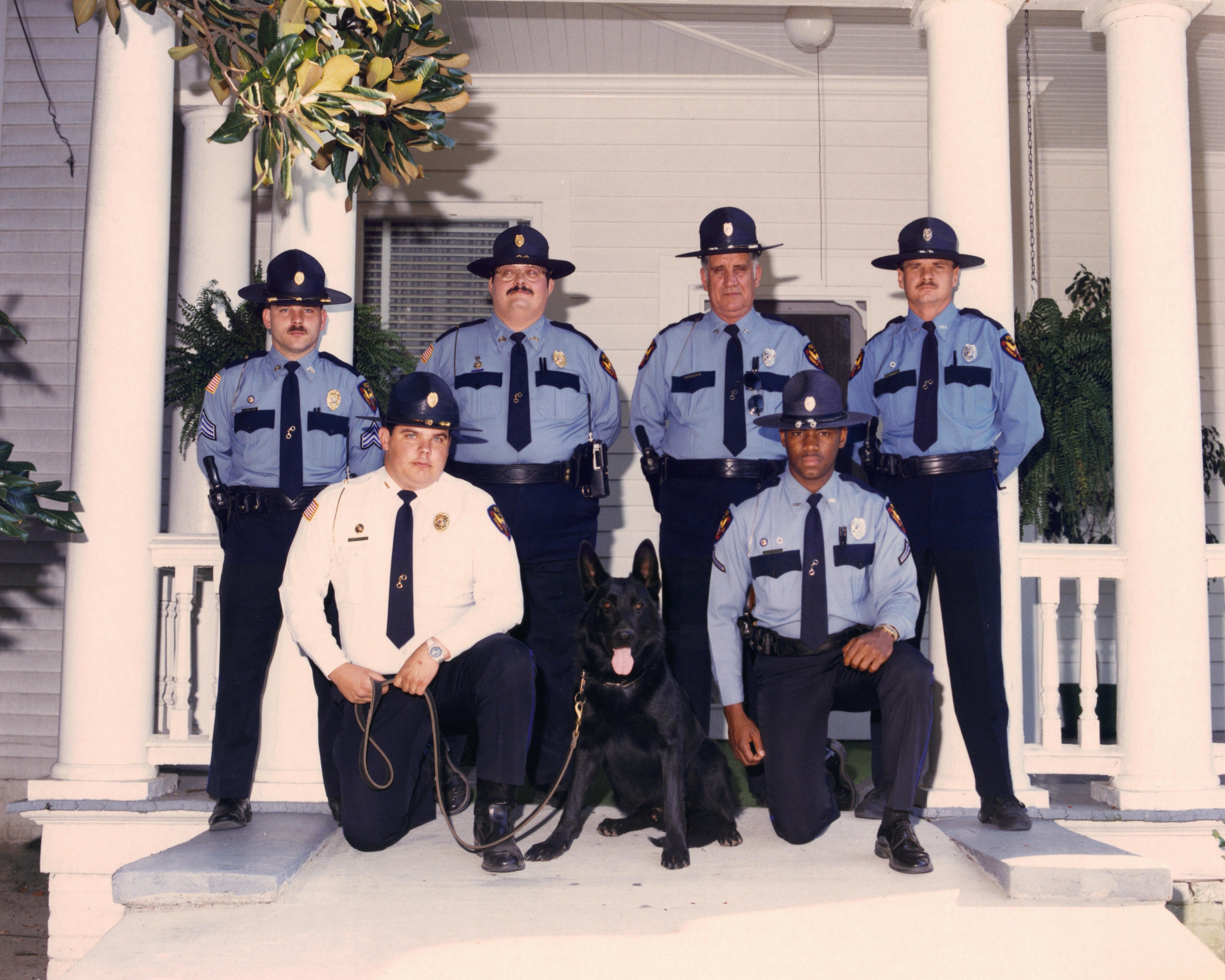


The Batesburg-Leesville was established on January 1, 1993, with the consolidation of the Batesburg Police Department and Leesville Police Departments. Former Batesburg Chief of Police, W. Wallace Oswald, who was the last Chief of Police for the Batesburg Police Department was selected to serve as the first Chief of Police for the Batesburg-Leesville Police Department. The Batesburg-Leesville Police Department was headquartered at the location of the former Batesburg Police Department at 660 West Columbia Avenue, Batesburg-Leesville. With the consolidation on 1993, the Town of Batesburg-Leesville switched to a Town Manager form of government with Olin Gambrell serving at the town's first Town Manager. In 1994, the Batesburg-Leesville Police Department Communication Center was upgrade with a Dictaphone 911 recording system to enable the Communication Center to record 911 calls for service. The year of 1995 saw many improvements to the services provided by the Batesburg-Leesville Police Department, which included the establishment of a Horse Patrol Unit, an enhancement of its investigative capabilities by establishing a Detective position for the agency, the establishment of the first Computer Aided Dispatch (CAD) System to improve the efficiency of the Communication Center, and the establishment of a bloodhound tracking program.
1996 saw the reconstruction of the old Leesville Police Department firearms range with improved access and an in-door training facility with the addition of a classroom to improve the firearms training for police officers who serve our community, with the progression of many ongoing improvements to the firearms range since that time under the leadership of Chief W. Wallace Oswald. In the late 1990s, the uniforms of the Batesburg-Leesville Police Department transitioned away from the traditional LAPD blue color polyester dress type uniform to a black tactical type of uniform. In 2008, Police Officers began using body worn cameras to record law enforcement activity between law enforcement officers and members of our community. 2009, saw the development of the agency's first traffic safety program, which provided grant funding for an officer to serve as the first traffic safety officer for the Batesburg-Leesville Police Department. The detective program was reestablished in 2012 with a dedicated Domestic Violence and Child Abuse Investigator, which has grown into the Detective Division that we have today. 2019 saw the establishment of the agency's first Unmanned Aerial Vehicle (UAV) program with the donation of a commercial grade drone.
On June 30, 2022, Chief of Police W. Wallace Oswald retired from the Batesburg-Leesville Police Department with 46 years of service, with 42 of those years as the agency's Chief of Police. Darren Amick was selected to serve as the second Chief of Police for the Town of Batesburg-Leesville.

Batesburg Police Department, Circa 1968. Pictured Left to Right: George Ray Wooley, Chief Winfield Rankin, Robert Reynolds, and Paul S. Yeager.
The Batesburg Police Department was established on August 7, 1877, with the creation of the Office of Town Marshall. D. O. Holston, was elected and sworn in as the first Town Marshall for the Town of Batesburg. At this time, Town Marshalls were elected on an annual basis, with additional Town Marshall's and Special Marshall's employed on an as needed basis. During this period, the Mayor for the Town of Batesburg was responsible for employing Town Marshall's and additionally served as the Town Judge for the municipal court, which was known commonly as the “Mayor’s Court”. By 1885, the term “Police” began appearing in town records universally with the term “Marshall” when referring to law enforcement officers. By 1897, the Office of Town Marshall consisted of two regular law enforcement officers. The Day Marshall was responsible attending to the streets and making arrests, while the Night Marshall, who was known as the Night Watchman or Lamp Lighter, was responsible for lighting and extinguishing the town’s street lamps. The Batesburg Town Marshalls began wearing the first official police uniform 1899, which consisted of a coat with buttons, a hat, and a badge.
In 1901 the term Town Marshall was phased out in favor of the term Chief of Police pursuant to newly established Batesburg Town Bylaws. In 1930, the Batesburg Police Department entered the age of the patrol vehicle with the purchase of a Ford Roadster. In 1932 the town sold the Ford patrol car necessitating that police officers use personally owned vehicles until 1948, when the town purchased a second patrol vehicle. In 1957, Carl E. Klapman was elected to serve as the town’s radio operator and fireman effectively establishing the early Batesburg Police Department Communication Center. By the 1960’s the Batesburg Police Department had grown to four officers and experienced the discontinuation of the practice of electing Police Officers in favor of an official hiring process. In 1970, Johnny Kenner of Ridge Spring was employed as the first black police officer for the Batesburg Police Department and in 1976, Linda C. Hallman was employed by the Batesburg Police Department as its first female police officer. In 1989, the first drug dog was donated to the Batesburg-Leesville Police Department by WABCO, which was also known as Union Switch and Signal.
In 1976, W. Wallace Oswald began his service with the Town of Batesburg and was additionally promoted to Chief of Police in 1980. Chief Oswald served as Chief of Police until the Towns of Batesburg and Leesville consolidated in 1993, making him the longest serving Chief of Police in the history of Batesburg-Leesville. While serving the Batesburg Police Department, Chief Oswald oversaw the growth of the agency to 11 Police Officers and instituted many law enforcement programs that were considered revolutionary for its time and well in advance of most law enforcement agencies in South Carolina at that time. These innovative programs included transitioning from the revolver to the auto pistol, construction of the Batesburg Firing Range, establishing a ranking system for police officers, establishing the first Juvenile Arbitration Program in Lexington County, issuing bullet resistant vests to police officers, and was the only Batesburg Police Officer to graduate from the FBI National Academy.
The Batesburg Police Department consolidated with the Leesville Police Department on January 1, 1993. At the time of consolidation the Batesburg Police Department consisted of eleven police officers and three dispatchers.

Leesville Police Department, Circa 1964. Pictured Left to Right: Chief of Police Frank D. Kneece, Thomas "Tommy" J. Fox, and Rudolph Miller, standing in front of the 1962 Ford Police Car.
It is believed that the Leesville Police Department was established in 1875, following the establishment of the Town of Leesville on February 23, 1875. Town of Leesville records were not available between 1875 and 1950 at the time of this history. The earliest official record available at this present time is dated January of 1951, when the Leesville Police Department consisted of two Police Officers, Chief of Police J. M. Langford and Frank D. Meetze, who was serving as the night officer. The Town of Leesville operated under the Mayor-Council form of government during this time. The Leesville Police Department increased in size to three officers in 1955. In 1961, the Leesville Police Department established a communication center with Norman L. Thomas serving as the town's first night radio dispatcher. By 1963, plans were developed and approved to remodel the Leesville Town Hall. The renovations to the Town Hall included removing the second story of the structure to incorporate the Police Department, the Fire Department, the Council Room, the Courtroom, and the Front Office area.
The agency expended to four police officers in 1966 and again to five police officers in 1975. In February of 1987, the Leesville Police Department Communication Center was dissolved and all police and fire communications was transferred to Lexington Central Dispatch. The first annual "Ridge Poultry Festival" was established in May of 1987, which coincided with the establishment of a Horse Patrol Unit by the Leesville Police Department. On February 16, 1988, Chief of Police Jesse W. "Bill" Lundy died in the line of duty following a shooting incident that occurred the day before while assisting the Lexington County Sheriff's Department. The following month the Leesville Town Council approved the purchase of bullet resistant vests for the police officers of the town. On December 15, 1988, a second tragedy occurred within the Town of Leesville with the death of Lieutenant Thomas Long Kerney, who died in a motor vehicle collision after loosing control of his issue 1989 Ford Mustang while escorting fire trucks on North Lee Street.
The Leesville Police Department consolidated with the Batesburg Police Department on January 1, 1993. At the time of consolidation the Leesville Police Department consisted of six police officers.